

Share This Blog Post
Your brand identity is either your greatest asset or your silent conversion killer in the 2026 marketplace. You’ve likely felt the frustration of generic product pages that strip away your unique voice, leaving you lost in a sea of competitors. Many sellers still search for the legacy amazon webstore solution, which officially shuttered in 2015, only to find a landscape that has shifted toward immersive, high-end brand experiences. It’s easy to feel confused when the tools you once relied on have evolved into a complex ecosystem of Brand Stores and A+ Content.
We agree that maintaining a bespoke feel within a global marketplace is a significant challenge for ambitious retailers. We promise to clarify this evolution, showing you exactly how the transition to modern Brand Storefronts can drive a 20% increase in repeat customer visits according to recent industry benchmarks. This article provides a world-leading roadmap to mastering modern Amazon branding, helping you bridge the gap between visual beauty and technical optimization for maximum scalability with our certified partner expertise.
Key Takeaways
- Understand the historical transition from the original amazon webstore to modern Brand Storefronts to better navigate today’s sophisticated e-commerce landscape.
- Learn how to leverage Amazon Brand Registry to unlock premium tools that transform your presence into a high-conversion brand destination.
- Discover why a mobile-first architecture is critical for capturing the massive volume of app-based shoppers and driving seamless conversions in 2026.
- Evaluate the strategic synergy between internal Amazon Storefronts and standalone platforms to maximize your brand’s global scalability and multi-channel reach.
- Gain insights into why world-leading brands choose bespoke, data-driven design over generic templates to achieve measurable growth and elite market positioning.
Understanding the Legacy: What Was the Amazon Webstore?
The amazon webstore represented a bold era of e-commerce experimentation. Between 2010 and 2016, this standalone platform empowered retailers to build independent websites powered by Amazon’s world-leading infrastructure. It wasn’t just a marketplace listing; it was a comprehensive Software-as-a-Service (SaaS) solution that allowed businesses to use their own domains while leveraging the technical muscle of a global giant. Retailers gained access to Amazon’s robust checkout systems, search technology, and payment processing, all hosted on a private URL.
What truly separated this platform from its peers was its seamless integration with Fulfillment by Amazon (FBA). During its peak years, this was a revolutionary concept. A merchant could sell a product on their private site, and Amazon would pick, pack, and ship it from their own warehouses. This synergy between frontend design and backend logistics provided a level of scalability that few independent platforms could match at the time. However, the e-commerce environment moves fast, and even a giant like Amazon must remain agile to maintain its elite status.
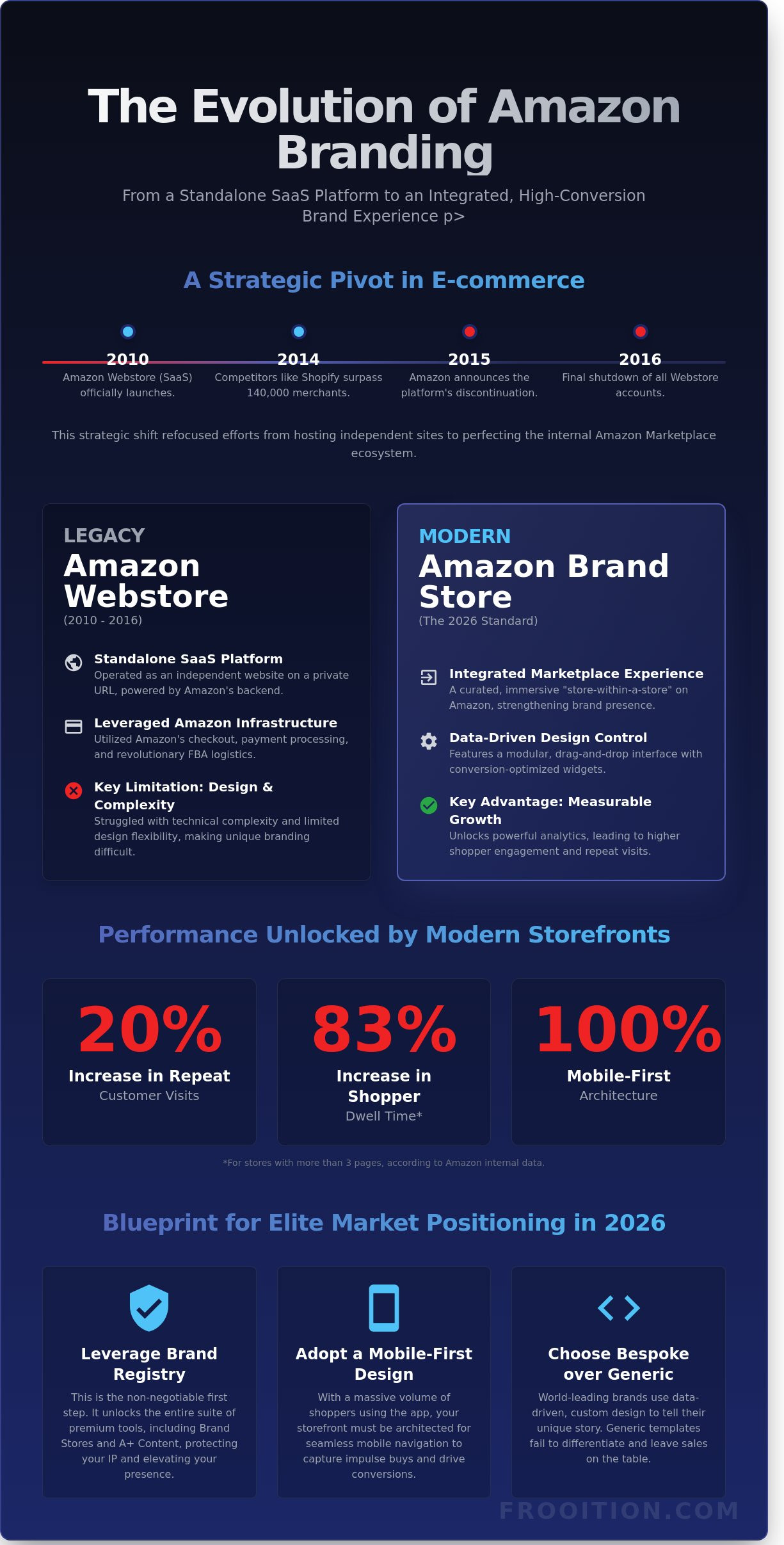
In 2015, Amazon made the strategic decision to discontinue the service, officially shutting it down on July 1, 2016. This pivot signaled a massive shift in their business logic. Instead of managing the technical complexity of hosting thousands of individual websites, they chose to focus on the growth of the Amazon Marketplace and the refinement of their internal brand tools. This transition forced a migration of thousands of sellers, many of whom sought out bespoke Shopify design or custom BigCommerce solutions to maintain their independent brand presence.
The Rise and Fall of a Standalone Giant
Amazon originally entered the webshop-hosting market to compete directly with early innovators like Shopify. By 2014, Shopify’s merchant base had grown to over 140,000 active stores, signaling a massive demand for independent brand control. While the amazon webstore offered incredible backend power, it struggled with technical complexity and limited design flexibility. Merchants found it difficult to achieve the high-end, unique aesthetics required to stand out in a crowded market. The eventual discontinuation in 2016 allowed Amazon to shed the burden of website hosting and double down on their core strength: the world’s most successful marketplace ecosystem.
The Pivot to Brand Stores
The closure of the standalone platform didn’t mean Amazon abandoned brand identity. They simply moved the experience inside the marketplace walls. This led to the rise of Brand Registry and Amazon Stores, which have now become the trust standard for serious retailers. By owning the marketplace experience rather than the hosting environment, Amazon created a more controlled, high-conversion ecosystem for sellers. The legacy Webstore acts as a vital precursor to modern multi-channel selling, proving that success requires a perfect balance of independent brand authority and centralized marketplace reach.
- 2010: Official launch of the standalone SaaS platform.
- 2015: Amazon announces the platform’s discontinuation.
- July 1, 2016: The final shutdown of all active Webstore accounts.
- Result: A total strategic pivot toward Brand Registry and the Marketplace model.
The Modern Successor: Amazon Brand Stores in 2026
The original amazon webstore platform officially closed its doors in July 2016, but its legacy lives on through the sophisticated Amazon Brand Storefront. This modern iteration isn’t just a replacement; it’s a massive upgrade that allows retailers to build a curated, immersive shopping environment. By 2026, these storefronts have become the primary vehicle for brand storytelling on the platform, moving away from the rigid, text-heavy listings of the past toward a high-impact visual experience.
Retailers have traded the complex custom HTML requirements of the old amazon webstore for a modular, drag-and-drop interface. This shift empowers brands to deploy conversion-optimized widgets that respond to real-time data. Data from Amazon’s 2024 internal reports indicates that stores with more than three pages see an 83% increase in shopper dwell time. This synergy between design and data ensures that your presence is both beautiful and high-performing, providing the scalability needed for global growth.
Key Features of the 2026 Storefront
Success in the modern marketplace requires more than static images. The 2026 Storefront utilizes dynamic background video and high-resolution hero imagery to capture attention within seconds. These features don’t just look professional; they drive measurable results. Consider these essential components:
- Automated Product Grids: These widgets update in real-time based on your inventory levels and “Best Seller” status, ensuring you never waste precious real estate on out-of-stock items.
- Integrated Social Connectivity: Built-in “Follow” buttons and social sharing tools allow you to build a loyal customer base directly on the platform.
- Immersive Video Content: Auto-playing background videos provide a cinematic feel that increases engagement by up to 25% compared to static banners.
Brand Registry: The Gatekeeper to Professionalism
Accessing these world-leading tools requires enrollment in the Amazon Brand Registry. This program serves as the essential gatekeeper, requiring a registered trademark and a verified professional account. It’s the only way to unlock the full potential of your brand’s narrative and protect your intellectual property from counterfeiters. A Brand Store is essentially a “mini-website” within the Amazon ecosystem, providing a sanctuary where competitors’ ads don’t distract your customers.
To ensure your multi-channel strategy remains cohesive across all platforms, you might consider how a bespoke Shopify design can mirror your Amazon presence for a seamless brand identity. This level of control is vital for maintaining a professional image while scaling your global operations. By leveraging these features, you transform a simple product list into a high-conversion destination that maximizes your external ad ROI and internal traffic flow.
Amazon Webstore vs. Standalone E-commerce Platforms
Choosing between an Amazon Webstore and a standalone platform isn’t a binary decision; it’s a strategic calculation for brand longevity. While the modern amazon webstore offers a powerful brand hub within the marketplace, it functions within a controlled environment. External platforms like Shopify or BigCommerce provide the autonomy that ambitious brands need to scale beyond Amazon’s boundaries. You aren’t just choosing a site; you’re choosing how much control you want over your customer’s journey.
Amazon captures high-intent shoppers with incredible efficiency. Current data shows that 63% of consumers start their product searches on Amazon, making it an essential channel for discovery. However, the marketplace limits your ability to retarget those users directly. A standalone site serves as your digital flagship. It’s where you define your brand identity without competing with “sponsored” listings from rivals that appear on your own product pages.
Multi-channel growth is the gold standard for 2026. Successful retailers use the reach of an amazon webstore to acquire new customers while driving repeat business to their bespoke sites. This strategy diversifies risk. If an algorithm shift or a policy change impacts your marketplace visibility, your standalone site continues to generate revenue and collect vital first-party data.
Why Standalone Sites (Shopify/BigCommerce) Still Matter
Ownership is the primary driver here. When you sell on Amazon, you’re essentially renting space on someone else’s land. On a standalone site, you own the infrastructure and the data. 80% of high-growth retailers cite customer data ownership as their top priority for 2026 because it fuels personalized marketing. You gain total control over the user experience. You don’t have to follow restrictive layout guidelines. Instead, you can invest in custom Shopify website design to create a unique brand narrative that resonates with your specific audience. This freedom allows for sophisticated email marketing, loyalty programs, and bespoke checkout experiences that aren’t possible within the marketplace ecosystem.
The Multi-Channel Synergy
Synergy happens when design and data intersect across every touchpoint. You use Amazon for its world-leading logistics and massive reach, then use your private site for high-margin brand storytelling. Professional design builds trust. If a customer sees a polished Amazon presence and then visits a world-leading site built via BigCommerce design services, their confidence in your brand increases. Recent industry reports indicate that a cohesive cross-channel visual identity can boost overall conversion rates by 33%. This integrated approach ensures you’re never dependent on a single algorithm for your business survival, creating a robust foundation for global scale.
Designing for Conversion: Best Practices for Your Storefront
Effective design within an amazon webstore ecosystem isn’t just about aesthetic appeal; it’s a strategic engine for conversion. High-end design translates to trust. In a marketplace where shoppers encounter thousands of competing listings, your storefront must act as a digital flagship that commands authority. World-leading brands understand that every visual element should serve one of two purposes: reducing buyer friction or building brand equity. This bespoke approach ensures your brand doesn’t just exist on the platform but thrives within it.
Mobile-first architecture is no longer optional for serious retailers. With over 70% of Amazon customers completing purchases via mobile devices in 2023, your layout must be responsive and streamlined for the Amazon app experience. Professional branding provides a psychological anchor for consumers, transforming a “faceless” transaction into a relationship with a certified expert. By integrating A+ Content, you provide the technical specifications and lifestyle context needed to eliminate the “touch and feel” barrier that often stalls online sales. This clinical precision in design reduces the bounce rate and keeps customers engaged with your product catalog. For a deeper dive into the principles behind effective amazon storefront design, our comprehensive 2026 guide walks through every conversion-focused element you need to build a bespoke shopping experience.
Visual Storytelling and UI/UX
Your brand journey begins in the search results but culminates in the Storefront. You have exactly three seconds to capture a shopper’s attention before they scroll away. This “Three-Second Rule” requires a punchy, benefit-driven hero image and a clear navigation structure. Use high-resolution lifestyle imagery to show your product in action; this solves the sensory gap of digital retail. A seamless UI ensures that the path from discovery to checkout remains unobstructed and intuitive for every visitor. For comprehensive guidance on creating these high-impact visual experiences, our Amazon brand store design strategic guide provides the architectural framework needed to transform your storefront into a premium retail destination.
Data-Driven Optimization
Success on Amazon requires a synergy between creative design and clinical data. Utilize Amazon Store Insights to monitor traffic sources and sales trends to identify high-ROI pages. A/B testing Storefront modules can boost conversion rates by 25% when executed with precision. While focusing on Amazon, apply these principles across all channels. Implementing eBay SEO services ensures your brand remains competitive across the entire e-commerce landscape. This consistency reinforces your status as a global leader in the industry.
Scaling Your Brand with Frooition’s Amazon Design Experts
Leading global brands don’t just seek a presence; they demand dominance. Frooition delivers bespoke Amazon Storefronts that move the needle. With over 20 years of marketplace expertise, we’ve learned that a high-performing amazon webstore requires more than just high-resolution imagery. It demands a strategic synergy between design and data. This philosophy ensures every visual element serves a specific conversion goal. Our team analyzes buyer behavior patterns from over two decades of marketplace history to inform every creative decision we make. We bridge the gap between backend technical optimization and front-end aesthetics to ensure your brand feels both innovative and grounded in proven success.
Professional Design vs. DIY Templates
Standard Amazon modules often feel restrictive. They box your brand into a generic look that fails to differentiate your products from the competition. Our design specialists push these technical boundaries. We create custom layouts that mirror your unique brand identity while adhering to Amazon’s strict performance requirements. This level of professional design ensures a seamless experience for customers moving between your amazon webstore, your official website, or other sales channels. For those scaling multi-channel operations, we also provide ebay listing templates to maintain a unified visual language. Consistent branding across platforms is a proven driver of consumer trust, often leading to a 23% increase in revenue for established retailers. Our proprietary approach to high-conversion Amazon brand store design transforms basic storefronts into premium retail destinations that command higher average order values and build immediate trust with shoppers.
Start Your Growth Journey Today
The Amazon ecosystem is complex and constantly evolving. As a Certified Partner, Frooition acts as your expert mentor, providing the reliability and precision your business needs to scale. We’ve helped over 8,000 sellers move beyond basic listings to create immersive brand experiences. Our “design that sells” approach focuses on the intersection of beauty and business logic. We invite you to leverage our world-class design team for a bespoke audit of your current digital footprint. We’ll identify the specific levers you need to pull to increase sales and improve your brand authority. Take the next step in your business journey with a partner that knows exactly how to drive results. Book a consultation to transform your Amazon presence and see what two decades of elite e-commerce expertise can do for your bottom line.
Future-Proof Your Brand Identity on Amazon
The journey from the original amazon webstore to the sophisticated storefronts of 2026 marks a massive shift in how retailers engage shoppers. Success now requires more than just a basic product listing; it demands a bespoke visual identity that bridges the gap between high-end design and backend technical optimization. You’ve seen how the evolution of digital branding rewards those who prioritize seamless user experiences and conversion-driven layouts that reflect a modern, professional aesthetic.
Frooition brings over 20 years of e-commerce design expertise to your project, ensuring your brand stands out in an increasingly crowded marketplace. As an Official eBay Gold Partner that’s supported 5,000+ brands globally, we understand the synergy between data and aesthetics. We don’t just build pages; we engineer high-performing assets that drive measurable growth. Your storefront is your digital flagship, and it deserves the clinical precision of world-class specialists who focus on design that sells.
Elevate your brand with world-leading Amazon Storefront design
The future of e-commerce belongs to those who act decisively today. Let’s build something extraordinary together.
Frequently Asked Questions
Is the Amazon Webstore still available for new sellers in 2026?
No, the Amazon Webstore service isn’t available in 2026 because Amazon officially shuttered the platform on July 1, 2016. Sellers looking for a dedicated brand presence now utilize Amazon Storefronts to reach customers. This shift moved the focus from standalone sites to integrated brand experiences within the marketplace ecosystem. Our team helps retailers navigate these modern alternatives to ensure long-term scalability and world-leading design.
What is the difference between an Amazon Storefront and an Amazon Webstore?
The primary difference lies in the hosting environment and integration. An amazon webstore was a standalone e-commerce site that used Amazon’s technology but lived on its own domain. In contrast, an Amazon Storefront is a bespoke branded destination that exists entirely within the Amazon marketplace. Storefronts offer a seamless shopping experience for the 310 million active customer accounts already browsing the platform’s global infrastructure daily.
Do I need a trademark to create an Amazon Storefront?
You must have a registered trademark to access Amazon Brand Registry, which is a prerequisite for creating a Storefront. Amazon requires a pending or active text-based or image-based trademark registered with the USPTO or equivalent international offices. This certification protects your intellectual property and unlocks advanced marketing tools. Industry data shows that 59% of shoppers prefer buying from brands they recognize, making this registration vital for professional growth.
Can I use my own domain name with an Amazon Storefront?
You can’t host an Amazon Storefront on a private domain, but you can create a shortened vanity URL like amazon.com/yourbrand. This link provides a professional way to direct external traffic from social media or email campaigns. While the amazon webstore allowed for custom domains, the current Storefront model prioritizes the trust and conversion power of the global Amazon domain. It’s a strategic trade-off that results in significantly higher buyer confidence.
How much does it cost to set up a professional Amazon Brand Store?
Amazon doesn’t charge a subscription fee to build or maintain a Brand Store for sellers enrolled in the Brand Registry program. While the platform tools are free, professional retailers often invest in bespoke design services to ensure peak conversion. High-end optimization involves strategic layout planning and data-driven asset creation. This investment differentiates world-leading brands from the competition, especially since 70% of shoppers never click past the first page of search results.
How does an Amazon Storefront improve my SEO on the marketplace?
Amazon Storefronts improve your SEO by providing a centralized hub that search engines like Google index for external traffic. Within the marketplace, a well-structured store increases dwell time and encourages multi-item baskets. These metrics signal relevance to the A9 algorithm, boosting your organic rankings. By utilizing high-volume keywords and professional imagery, you’ll see a measurable lift in visibility. We focus on the synergy between design and data to maximize these results.
Can Frooition help me migrate from a legacy platform to a modern Storefront?
As a world-leading Certified Partner, Frooition specializes in migrating brands from legacy systems to high-performance Amazon Storefronts. We handle the technical heavy lifting and creative execution to ensure your brand identity remains consistent. Our design-that-sells philosophy has helped thousands of retailers scale their operations across multiple channels. We bridge the gap between complex backend optimization and beautiful, conversion-focused front-end design to drive your business forward with clinical precision.
Share This Blog Post
Related Posts



Thanks! We'll be in touch within one business day.