Share This Blog Post
Key Takeaways
- Understand what separates a genuinely capable BigCommerce web design company from an agency that just reskins templates.
- Learn what to actually check when someone claims “certified partner” status — and why real data migration experience matters as much as the badge.
- Understand when a premium template is genuinely enough, and when a bespoke build earns its higher cost.
- See how unifying BigCommerce with eBay and Amazon keeps inventory and branding consistent across every channel.
- Understand Frooition’s approach to combining design with the retail data that actually drives decisions.
A polished website used to be a differentiator. Today it’s closer to table stakes — buyers expect a consistent experience whether they land on your site, your eBay store, or your Amazon page. If you’ve paid for a premium BigCommerce build and still find mobile conversions lagging while your marketplace data lives in its own silo, you’ve likely hired a BigCommerce web design company that prioritized visuals over the underlying retail logic.
You need more than a storefront — you need a system that supports how you actually sell across channels. This guide walks through how to vet a BigCommerce web design company properly: what real certified-partner status looks like, when a bespoke build is worth it over a premium theme, and how to unify your BigCommerce store with eBay and Amazon rather than running them as three disconnected projects.
Why Your Choice of BigCommerce Web Design Company Matters in 2026
The bar for an online store keeps rising. A basic, functional site is no longer enough to hold attention in a crowded market — the difference between a store that converts and one that doesn’t often comes down to the technical architecture behind the design, not just how it looks. Choosing a BigCommerce web design company is a strategic decision, not a creative one.
The risk with “template-flipping” agencies is real: reskinning a basic theme without touching the underlying code can leave you with hidden technical debt that costs more to maintain over time than a proper build would have. Poor user experience isn’t just an aesthetic problem — it quietly costs conversions. Choosing the right partner is often the difference between a store that merely exists and one that actually competes.
The ROI of Professional BigCommerce Implementation
Custom development from an experienced partner avoids the bloat that comes from stacking third-party apps on top of each other. Site speed remains a real factor in both search visibility and conversion — slow-loading pages lose visitors before they ever see your product. Professional implementation means fewer shortcuts and less accumulated technical debt as your catalogue and traffic grow.
SaaS vs. Open Source: Why BigCommerce Wins for Growth
BigCommerce’s hosted model means you’re not managing servers or patching security issues yourself, unlike a self-hosted platform such as Magento or WooCommerce. Relying on the platform’s native features instead of a long list of paid plugins keeps your monthly overhead more predictable and your codebase simpler to maintain — freeing up budget for marketing and growth instead of infrastructure upkeep.
The Hallmarks of an Elite BigCommerce Certified Partner
A genuinely capable BigCommerce web design company is more than a design studio — they’re technical architects who understand the platform in depth. Certification status is worth checking, but it’s only a starting point; ask about their track record with real, complex data migrations. Moving a large catalogue off a legacy platform like Magento or Volusion without losing data integrity is a meaningfully different skill from building a new store from scratch. An in-house team, rather than one that white-labels work out to subcontractors, also tends to mean fewer things get lost in translation across your project.
For a serious retailer, your online presence should be built on BigCommerce’s Stencil framework, which supports fast load times and straightforward updates. Look for an agency with demonstrated experience connecting BigCommerce to the rest of your tech stack — ERP, CRM, and other systems — since that’s often where projects run into trouble.
Technical Mastery and API Proficiency
Headless commerce — decoupling your front-end from the BigCommerce backend — gives brands real flexibility when they need something templates can’t offer. A capable agency should be comfortable connecting BigCommerce to your ERP, CRM, and PIM systems, and should be able to talk you through streamlined, low-friction checkout flows rather than defaulting to whatever the theme ships with. If you’re ready to scale, explore our design solutions to see how we bridge design and performance.
Strategic UX and Conversion Rate Optimisation
Design that exists purely to look good is a hobby; design built around how customers actually behave is a business decision. A capable BigCommerce web design company moves past “does it look nice” toward a genuinely conversion-focused approach — using real user behaviour data, not guesswork, to figure out where visitors drop off and why. With most e-commerce traffic now happening on mobile, a responsive build isn’t a nice-to-have, it’s the baseline.
- Certified Expertise: Verified platform knowledge and a track record you can actually check.
- In-House Development: Direct access to the people building your store, not a third-party hand-off.
- Data-Driven Design: Decisions informed by real user behaviour, not assumptions.
Bespoke Design vs. Premium Templates: Making the Right Investment
Whether a premium template or a custom build is the right call depends mostly on where your business actually is. A template can genuinely work well for a lean, early-stage store. Once you’re managing a large or complex catalogue, though, templates tend to hit a ceiling — and that’s usually where a bespoke build starts paying for itself.
The Limits of Off-the-Shelf Themes
Generic themes are built to work reasonably well for a huge range of different stores, which means they often carry code and functionality most individual stores never use. Adapting one to a specific B2B workflow or a complex product configurator can end up costing more in developer time than starting from a clean, purpose-built foundation would have. A slow, bloated theme also risks looking indistinguishable from other stores running the same base layout — working against the distinct brand identity you’re presumably trying to build.
The Power of Bespoke BigCommerce Development
Bespoke design is where visual branding and backend logic actually meet — mapping the customer journey to your specific audience rather than a generic template’s assumptions. If you’re managing a large or complex catalogue, or need business logic templates don’t support (tiered wholesale pricing, custom API integrations), custom development gives you room to build exactly what you need rather than working around what a theme allows.
Custom design isn’t purely a cost — done well, it’s a genuine driver of better conversion and average order value through more thoughtful cross-selling and a smoother path to checkout. It also needs to hold up under real traffic spikes during seasonal peaks, which is where a properly engineered build earns its cost. For brands ready to go further, our guide to BigCommerce multi-channel selling covers how a bespoke storefront works as part of a wider eBay and Amazon strategy.
- Conversion Focus: Journeys built around how your specific customers actually shop.
- Scalability: Built to handle a large SKU count without slowing down.
- Brand Authority: A distinct visual identity, not a shared template look.
The Multi-Channel Edge: Unifying BigCommerce, eBay, and Amazon
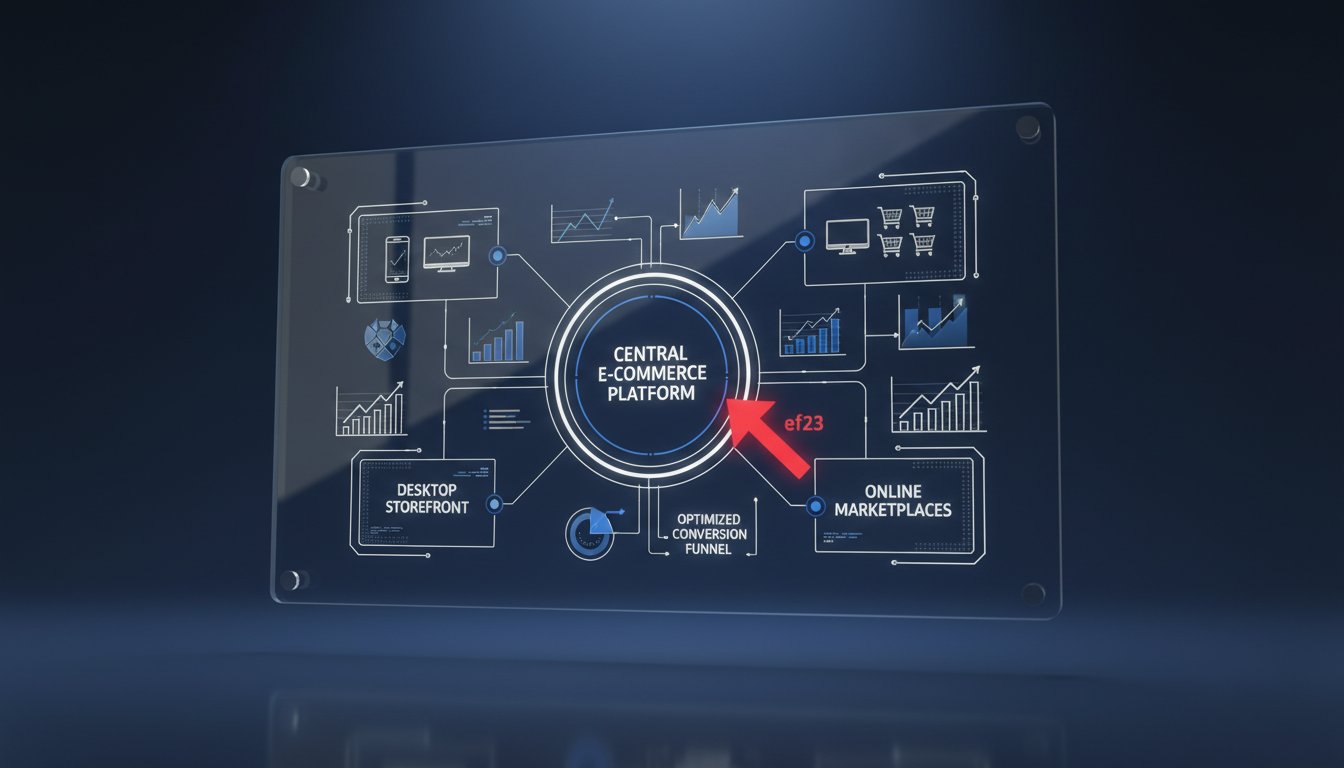
Customers don’t think in terms of “your website” versus “your eBay listing” — to them, it’s all the same brand. Many shoppers research and buy across more than one channel before completing a purchase, and if your visual identity or your stock levels feel inconsistent between them, that inconsistency costs you trust. A capable BigCommerce web design company should treat your BigCommerce store as the hub of that wider ecosystem, not a separate project.
Keeping inventory and order data in sync across BigCommerce, eBay, and Amazon isn’t optional once you’re selling on more than one channel — a product that sells out on Amazon needs your eBay listing to reflect that quickly, or you risk the kind of stockout that sends a buyer straight to a competitor. Your design partner needs a real, working understanding of each marketplace’s listing requirements so your branding translates properly rather than breaking inside their more rigid formats.
Synchronizing Design Across Marketplaces
Consistency is what makes a multi-channel presence feel like one brand rather than three disconnected shopfronts. Responsive eBay listing templates keep your brand looking professional on mobile, where a large share of marketplace browsing now happens. Used well, cross-promotion inside those templates can also help drive high-intent marketplace traffic back toward your own site over time.
Streamlining the Technical Workflow
Good multi-channel selling depends on the unglamorous parts working reliably — data feeds, currency conversion, localized tax handling, and shipping calculations all need to stay accurate as you scale internationally. We follow a structured process rather than leaving any of this to chance:
- Step 1: Audit existing marketplace assets and data health.
- Step 2: Define a brand style guide built to scale across every platform.
- Step 3: Implement cross-channel design and technical synchronization.
Ready to dominate every channel? Explore how our multi-channel design services can scale your business.
Partnering with Frooition: World-Leading BigCommerce Design
Experience matters in a fast-moving industry — it’s the main thing that separates agencies who talk about e-commerce from ones who’ve actually built at scale. Frooition has been designing for e-commerce sellers for over 20 years, working with 5,000+ brands across BigCommerce, Shopify, eBay, and Amazon. Our approach centres on pairing strong creative work with the retail data that actually tells you what’s working, not design for its own sake.
Frooition is a certified partner across BigCommerce, eBay, and Amazon, with in-house teams in both the UK and US supporting sellers across time zones. We don’t stop at launch — our managed services and ongoing optimisation are built to keep your store performing as consumer habits shift, including through peak traffic periods.
The Frooition Process: From Discovery to Deployment
Every project starts with a proper discovery phase, aligning our design approach with your actual business goals rather than a generic checklist. You’ll work directly with the in-house designers and developers building your store, with clear visibility into progress throughout. Post-launch support is standard, not an optional add-on — we stay involved to keep your store performing well after go-live.
Proven Results for Global Brands
Our BigCommerce work sits alongside two decades of eBay design experience — as an eBay Gold Partner, we bring a genuine understanding of multi-channel selling that a BigCommerce-only agency typically won’t have. That combination is what lets us make sure your BigCommerce store and your marketplace presence actually work together, rather than existing as separate projects with separate branding.
Ready to transform your digital storefront? Elevate your brand with Frooition’s BigCommerce expertise and start driving measurable growth today.
Future-Proof Your Store for 2026 and Beyond
Your storefront is more than a website — it’s the foundation your growth is built on. As templates become more common, the gap between generic stores and genuinely bespoke ones only gets more visible. Choosing the right BigCommerce web design company means finding a partner who can bring visual design and backend technical work together, and who understands how to unify a BigCommerce hub with marketplaces like eBay and Amazon rather than treating them separately.
Frooition brings over 20 years of e-commerce experience to every project, having worked with 5,000+ brands globally. We focus on a design-that-sells philosophy — building stores that look distinctive and perform well, without cutting corners on the technical side.
Request a Bespoke BigCommerce Design Consultation
We’re ready to help you build something extraordinary and watch your business thrive.
Frequently Asked Questions
What is the average cost of a custom BigCommerce web design in 2026?
Cost varies significantly based on your catalogue size, integration needs, and how much custom functionality you require. Rather than quote a generic range that may not reflect your actual project, we’ll give you a transparent, project-specific estimate once we understand your requirements.
How long does it typically take to design and launch a BigCommerce store?
Timelines depend on project scope, but most builds move through discovery, design, development, and QA before launch. Projects involving several third-party integrations naturally take longer than a simpler build. We’ll walk you through a realistic timeline for your specific project during the initial strategy session.
Can a BigCommerce design company help with migration from Magento or Shopify?
Yes — a capable BigCommerce web design company should be able to manage your full data migration from platforms like Magento or Shopify, including a proper 301 redirect map for your existing URLs to help protect your SEO through the transition. Ask any prospective partner directly about their migration track record before committing.
What is the difference between a BigCommerce Certified Partner and a freelance designer?
A certified partner typically has ongoing platform training and closer working relationships with BigCommerce itself, along with a track record across multiple projects rather than one person’s individual experience. That said, certification alone doesn’t guarantee quality — it’s worth asking any partner, certified or not, for real examples of their past work. For more on vetting the right fit, see our guide on how to find a BigCommerce designer.
Do I need a separate agency for my eBay and Amazon store designs?
Not if you choose a partner with genuine multi-channel experience. Working with one team across BigCommerce, eBay, and Amazon makes it easier to keep your branding consistent and reduces the coordination overhead of managing several separate agency relationships.
Does BigCommerce web design include SEO optimization?
Good web design should include the SEO fundamentals — clean URL structures, proper schema markup, and fast page load times — since these all affect how well your store performs in search regardless of your content strategy. It’s not a substitute for ongoing SEO work, but a well-built site gives that work a stronger foundation.
Can you integrate my ERP or POS system with a custom BigCommerce design?
Yes — a capable BigCommerce partner should be able to integrate with major ERP and POS systems to keep your inventory and order data synced accurately across your operation. This kind of integration is exactly where a generic template setup tends to fall short, since it depends on custom backend work rather than an off-the-shelf plugin.
What ongoing support is needed after a BigCommerce site launch?
A launch isn’t the finish line — most growing stores benefit from regular security updates, periodic conversion audits, and ongoing technical monitoring to keep pace with both platform updates and changing customer behaviour. How much ongoing support makes sense depends on your size and how often you’re changing things, which is worth discussing directly with your partner.
Share This Blog Post
Related Posts



Thanks! We'll be in touch within one business day.